Driver guide · National edition
Published October 30, 2026 · TruckRescueNow driver guide bank, stamped October 2026
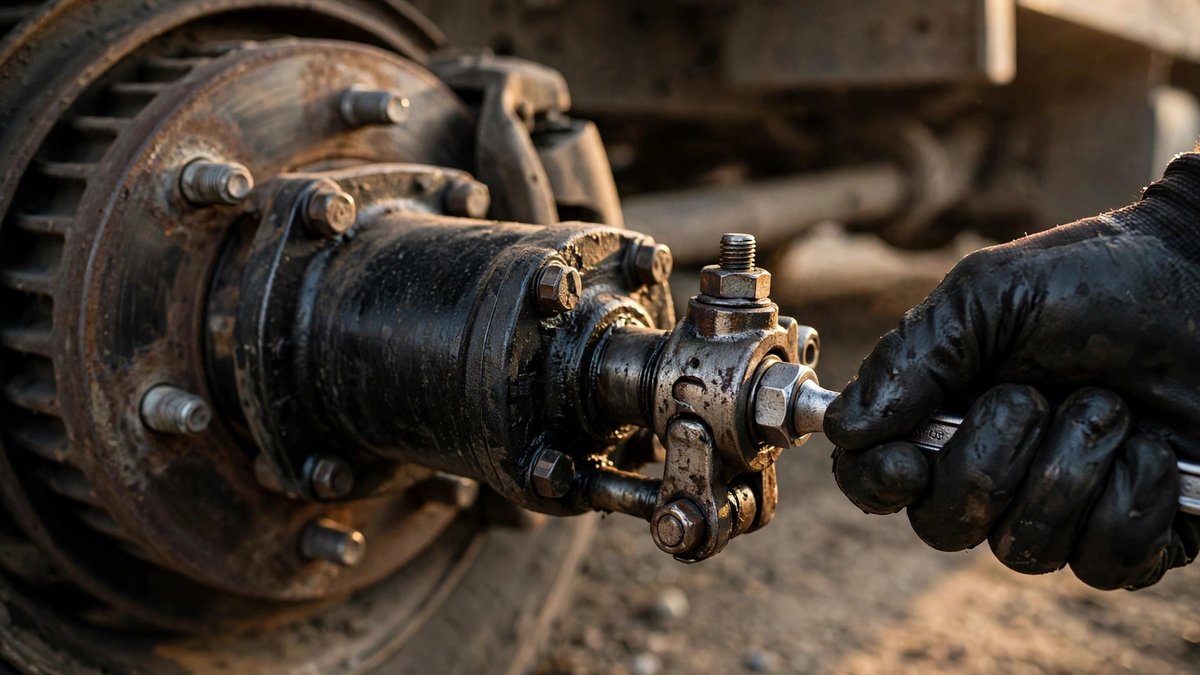
The distance the pushrod travels to press the linings against the drum. Too much travel means the brake applies late and weak — adjustment is measured in inches of pushrod stroke, and there is a legal maximum for each chamber size.
Automatic slack adjusters are supposed to hold that stroke in range as linings wear
"Out of adjustment" is the inspector's measurement, not an opinion — it is the single most common brake violation written at roadside inspections
An automatic adjuster that is failing, frozen, or was installed or maintained wrong stops adjusting — the brake drifts out of range while the mechanism that should prevent it sits there broken.
Manually cranking an automatic adjuster back into range masks the failure for a few applications and can damage the adjuster
The correct repair is finding why it stopped adjusting, not turning the bolt as a ritual
Manual slack adjusters (older equipment) genuinely require periodic manual adjustment — different hardware, different rule
A longer pedal, more stopping distance, and a truck that needs more air and more time to stop than it did last month — adjustment loss is gradual, so the seat-of-the-pants warning is easy to miss.
One brake out of range makes its partner brakes work harder and hotter
A pre-trip brake application check with a marked pushrod (the applied-stroke check) is how drivers catch it before inspectors do
Adjustment verification and correction, and slack adjuster or chamber replacement, are standard mobile brake work — this is one of the most roadside-fixable inspection defects there is.
Tell the dispatcher "brakes out of adjustment" and how many wheel ends the report or your check found
If you were placed out of service for it, the repair and the paperwork both matter (see the out-of-service article in this series)
Stopping distance is the product your brakes sell. An out-of-adjustment brake is a brake that arrives late to an emergency — the citation is the cheap version of finding out.
Brakes are a top-5 roadside failure system and 12% of trailer road calls are brakes/air (TMC/FleetNet; FleetNet America)
The inspection program knows this, which is why brake measurement is the first thing checked at a Level I