Driver guide · National edition
Published October 30, 2026 · TruckRescueNow driver guide bank, stamped October 2026
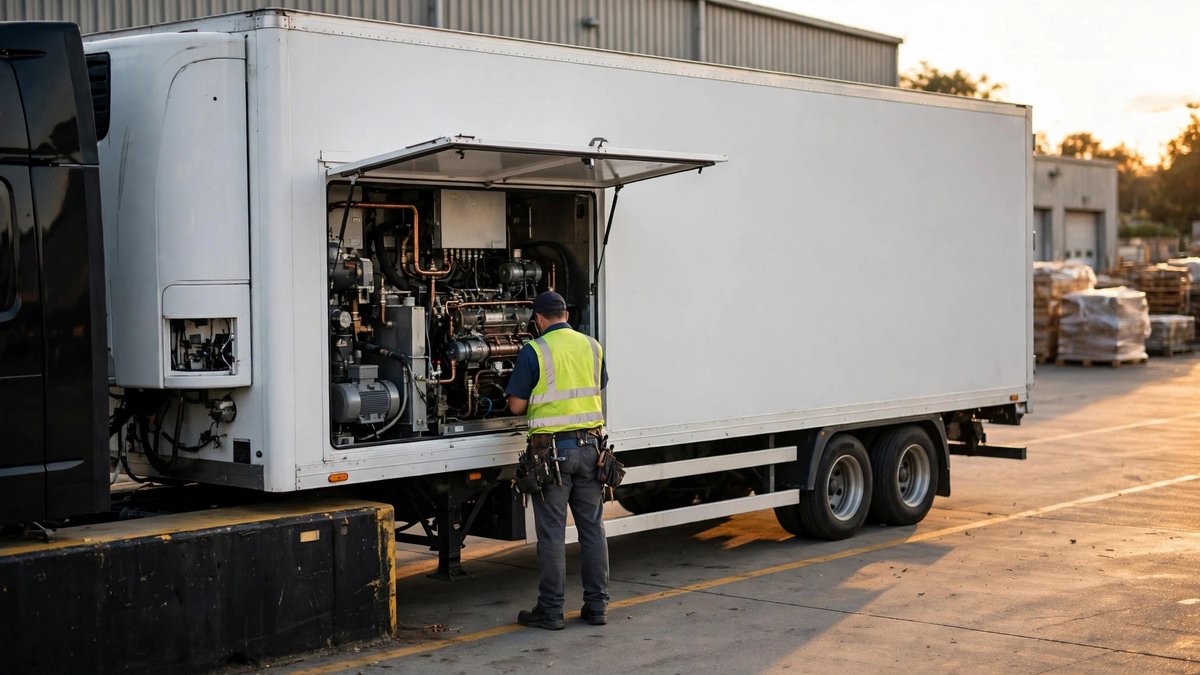
Protect the load clock, not the unit: note the time, the box temperature, and the setpoint the moment you find the failure — the claim record starts there.
Check the reefer fuel level first — an out-of-fuel reefer is the most common "dead reefer" and the fastest fix
Read the alarm codes off the unit display and write them down exactly
Call your dispatch or broker before you call for service — the load's owner must hear it from you first
A sealed, pre-cooled loaded trailer holds temperature for hours, not minutes — keep the doors closed and the clock is on your side.
Every door opening spends the cold you have left
Park in shade if you can do it without losing time
Products differ: ice cream and pharmaceuticals run on a short clock; produce and chilled freight run longer — your dispatch knows the load's tolerance, ask them
Many reefer faults are roadside-fixable: fuel, belts, batteries, sensors, and alarm resets; a failed compressor or major refrigeration fault is a shop job.
Tell the service dispatcher it is a reefer unit, the brand of the unit, and the alarm codes — reefer work is a specialty, and the codes decide who should roll
If the load must move, ask about a cross-dock or a swap trailer through your dispatch in parallel — do not wait serially on one option
A reefer download (the unit's temperature history) may be taken as part of the claim record — cooperate, it protects you too
Time and temperature at discovery, setpoint, every alarm code, every call you made and when, and the temperature when service arrived.
Photograph the unit display showing temperature and codes
Photograph the seal — an intact seal number that matches the paperwork is your protection
Write it down in order; claims are won on the timeline, not on memory
Never open the doors to "check the load" repeatedly, never guess-set the temperature, and never shut the unit off and restart it on a loop hoping the alarm clears.
A changed setpoint without instructions creates a claim problem that did not exist
A unit that is alarming is telling you the code — record it, do not erase it by cycling the switch