Driver guide · National edition
Published October 30, 2026 · TruckRescueNow driver guide bank, stamped October 2026
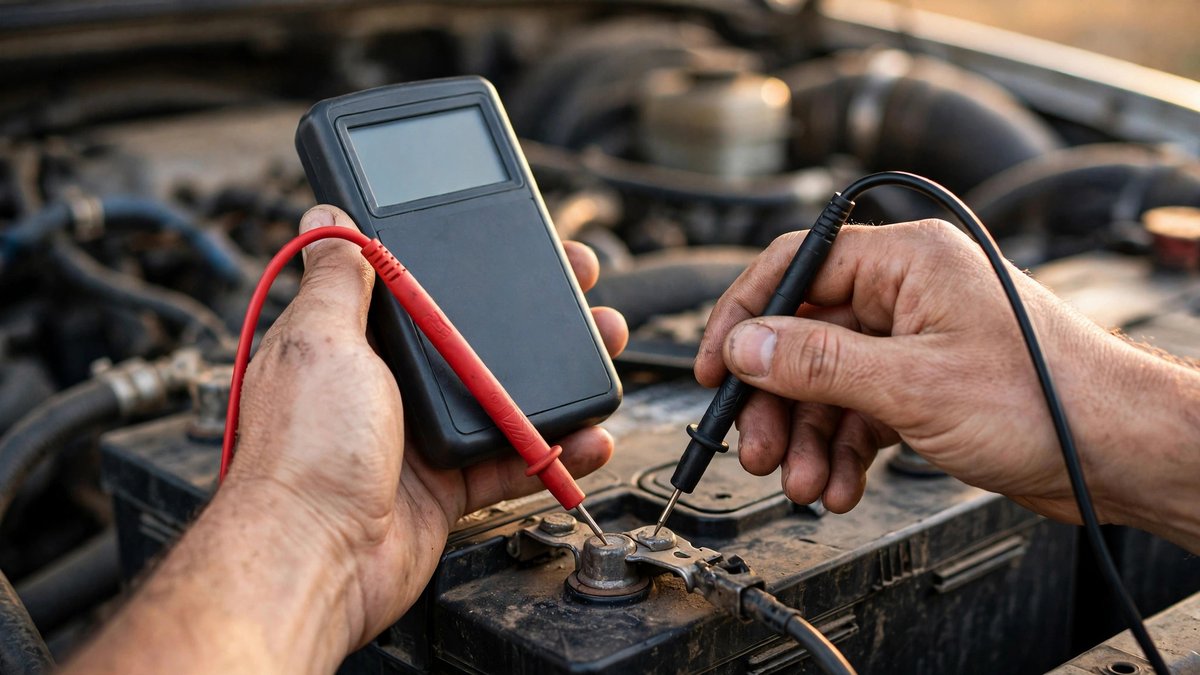
A dying alternator kills batteries, and dead batteries make a good alternator look guilty — the symptom (a no-start, dim lights) is shared; the test separates them.
The alternator's job: charge the bank and run the truck's electrical load while the engine runs
The battery's job: store charge and crank the engine
Jump-starting answers neither question — it only restarts the clock
The truck starts on a jump, drives, and dies or dims as it goes — the engine is eating the battery because nothing is refilling it.
Dash voltage gauge reading low while running (a healthy system runs around 13.8–14.4 volts)
Lights that brighten and dim with engine RPM
A charging-system warning light, or repeated dead banks on batteries that test good
Whine from the alternator or a burnt-electrical smell at the alternator housing
The truck charges fine all day and is dead after sitting — the bank will not hold what the alternator puts in.
Voltage normal while running, low after an overnight sit
Slow crank that gets worse across days, worst on the first start
One hot, swollen, or corroded battery inside an otherwise clean bank
Jump it, let it run, and watch the voltage: low voltage while running convicts the charging side; good voltage running and a dead bank by morning convicts the bank.
A service truck's tester settles it definitively under load — that test is the difference between buying a battery and buying the right repair
Do not disconnect a battery cable on a running modern truck to "test" the alternator — the voltage spike can damage the truck's electronics
Battery-side work commonly lands $150–$400 in the common-fix band; an alternator installed runs $400–$1,200+ before any roadside premium (Albert's Road Service published rates; KCH heavy-truck alternator cost guide).
That spread is why the test comes first: the two repairs differ by hundreds of dollars
Tell the dispatcher "starts on a jump, dies running" or "dead every morning" — each sentence routes a different parts load on the truck