Driver guide · National edition
Published October 30, 2026 · TruckRescueNow driver guide bank, stamped October 2026
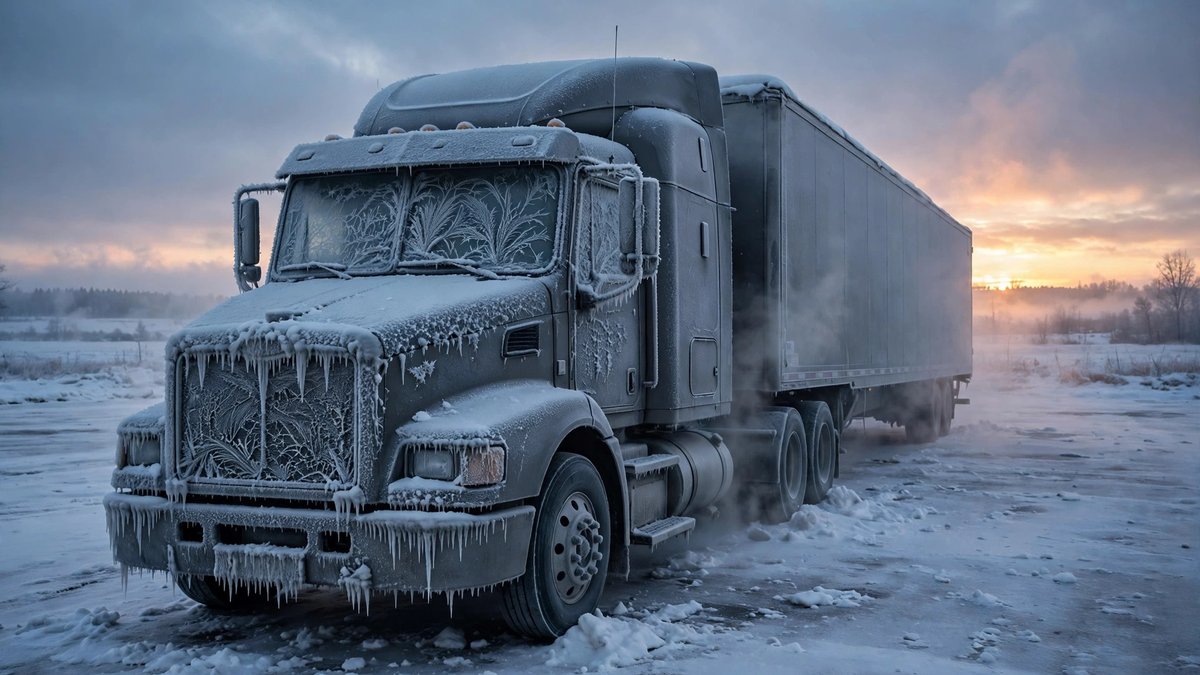
Cold attacks three systems at once: diesel fuel gels, battery output falls while cranking demand rises, and moisture in the air system freezes. Diagnose which one you have before you treat the wrong one.
Thick, cold oil makes the engine harder to turn at exactly the moment the batteries are weakest
The truck that "was fine yesterday" met all three at 4 a.m. — yesterday is not evidence
The engine cranks at normal speed, fires or sputters, then dies — or cranks without firing at all, with a fuel filter full of wax crystals when you check it.
Diesel begins to cloud and gel as temperatures fall toward and below freezing, untreated summer-blend fuel first
The fix order: replace the fuel filter, treat the tank with anti-gel/emergency de-gel per the product's directions, and get fuel moving again
Anti-gel works as prevention in liquid fuel; once the filter is waxed solid, the filter is the problem, additive alone is not
Slow, laboring crank that gets slower with each attempt — that is electrical, not fuel.
A block heater that was plugged in warms the engine, not the batteries — a warm engine on a dead bank still does not start
Jump from a proper heavy-duty source and let it charge before cranking; a weak jump source on a big bank just shares the weakness
Banks that fail in the first hard cold were failing quietly all fall (see the jump-or-replace article in this series)
The truck starts but will not build air, or builds air and a brake will not release — moisture froze at a valve or a low point in the lines.
An air dryer that has not been serviced is the usual source of the water
Alcohol-based air line antifreeze, added per your company's procedure, is the field treatment; open flame on air components is never the treatment
Draining tanks daily in winter is the prevention — water found in the tank is water that will freeze in the line
Listen first: crank speed tells you electrical vs fuel in three seconds. Then check the filter for wax, then look at air.
Do not burn the batteries cranking against a gelled filter — fix the order or you will own both problems
Tell the dispatcher "cold no-start" plus which of the three it looks like — each routes a different truck load-out