Driver guide · National edition
Published October 30, 2026 · TruckRescueNow driver guide bank, stamped October 2026
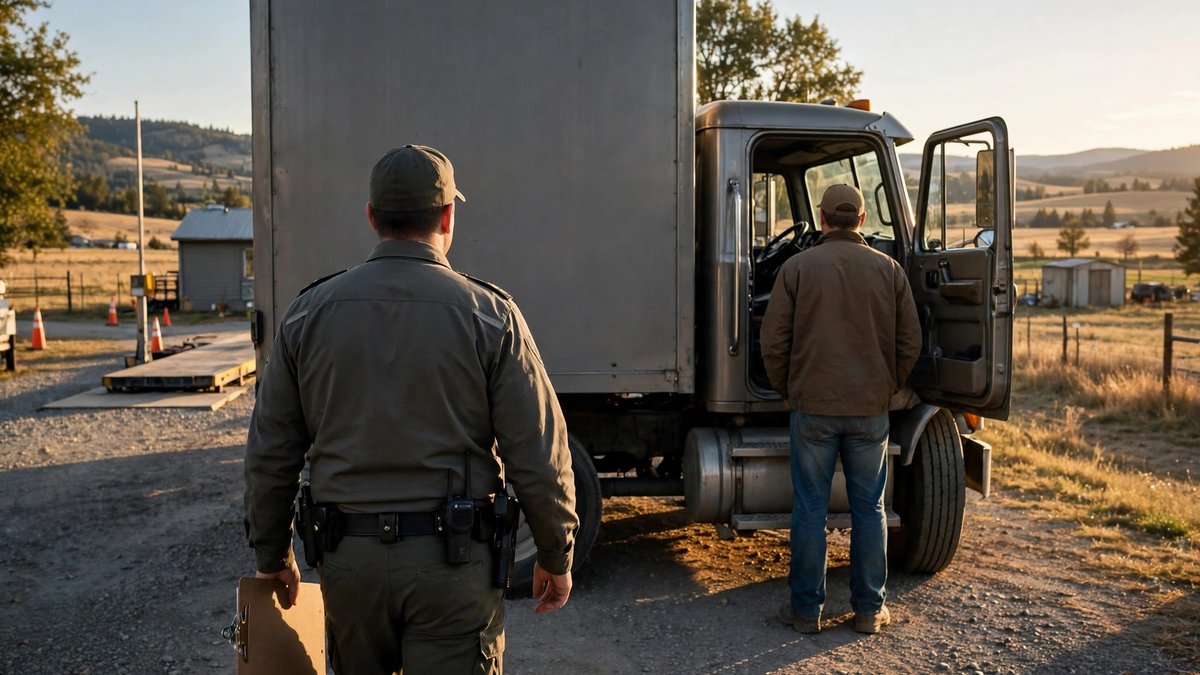
State troopers, state police, and CVSA-certified inspectors at scales, inspection stations, and roadside pull-offs — an inspection can start anywhere you can be lawfully stopped.
Inspections run under the North American Standard program (CVSA) — the same levels and criteria in every state
A clean, professional stop area setup is the first thing the inspector sees of you
Level I is the full one: driver documents plus a complete walk-around of the truck and trailer, including brakes measured and components checked underneath.
Level II: walk-around, no crawling underneath
Level III: driver paperwork only — license, medical card, logs, shipping papers
Level V: the vehicle only, no driver present (typically at a terminal)
Most roadside encounters are Level I, II, or III
License class and endorsements, medical certificate, hours-of-service records, and the shipping papers for what is in the trailer.
Hazmat loads add placards, shipping paper format, and endorsement checks
Your ELD must be transferable on request — know how your device sends its data before you are asked
The pre-trip you actually did is your first defense: inspectors find what pre-trips miss
Brakes first (adjustment and condition are the most common vehicle violations), then tires, lights, steering, suspension, coupling, and the frame.
Brake adjustment is measured, not eyeballed — a slack adjuster out of range is a written violation
Tire tread depth, flat spots, and exposed cord fail on measurement
Every light working, every time — lighting is the easiest violation to prevent and one of the most written
You get a report listing every violation found (or a clean inspection), and in serious cases an out-of-service order — the truck or the driver does not move until the condition is fixed.
Clean Level I inspections can earn a CVSA decal, valid for up to three months, that often passes you through the next scale
Violations feed your carrier's CSA scores — the inspection follows the company, not just the day
What happens after a failure is its own article in this series: "placed out of service — what happens now"