Driver guide · National edition
Published October 30, 2026 · TruckRescueNow driver guide bank, stamped October 2026
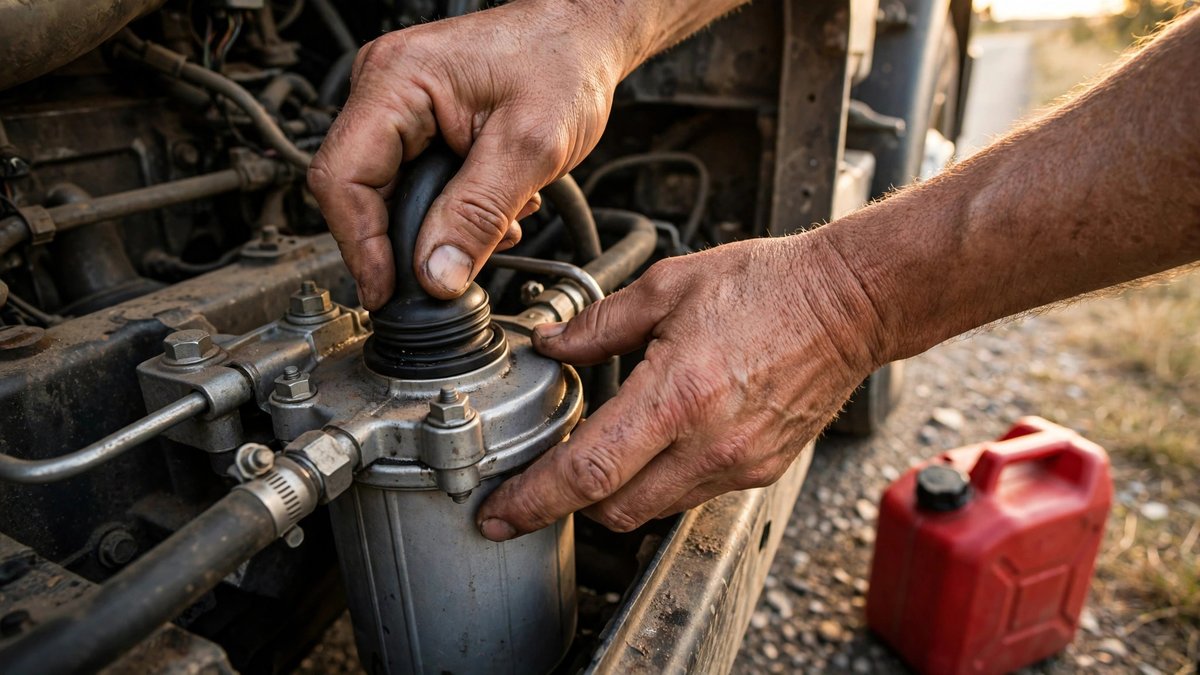
A diesel fuel system must be full of fuel, not air — when the tank runs dry, air fills the lines and the injection system cannot compress air into a start.
A gasoline engine self-primes; most diesel systems do not
Adding fuel fills the tank — it does not push the air out of the lines, filters, and pump
Cranking and cranking on a dry system adds a dead battery bank to the problem
Add fuel, then prime: use the hand primer pump (where fitted) until it goes firm, replace or fill the fuel filter if it was run dry, then crank in short bursts.
Some engines have a specific priming sequence in the manual — follow yours, not a generic video
Crack-and-bleed procedures on older systems are a mechanic's job if you have not done one — a fuel spill on a hot engine is its own emergency
Short crank bursts with rest between them: the starter overheats on long cranks
When priming does not firm up, the filter is dry and you have no spare, or the truck cranks with fuel at the rail and still will not fire.
A fuel-delivery call brings fuel, a filter, and the priming tools in one trip — ask for all three when you call
Roadside fuel and common-fix work commonly lands in the $150–$400 band (Albert's Road Service published rates)
Tell the dispatcher "ran it dry" — it changes the load-out from a fuel can to a fuel can plus filter plus primer kit
The fuel pump and injectors are lubricated by the fuel itself — running the system dry wears the parts the fuel was protecting.
One event is usually survivable; the habit is expensive
Dirt at the bottom of an empty tank gets pulled into the filter — a filter change after a run-dry is cheap insurance
Fuel by the gauge plus the math, not the gauge alone: know your tank size, your burn rate, and the distance to the next fuel on your route.
Gauges lie at the bottom of the tank — the last quarter is the lying quarter
Headwinds, weight, and grades all raise burn above your planning number