Driver guide · National edition
Published October 30, 2026 · TruckRescueNow driver guide bank, stamped October 2026
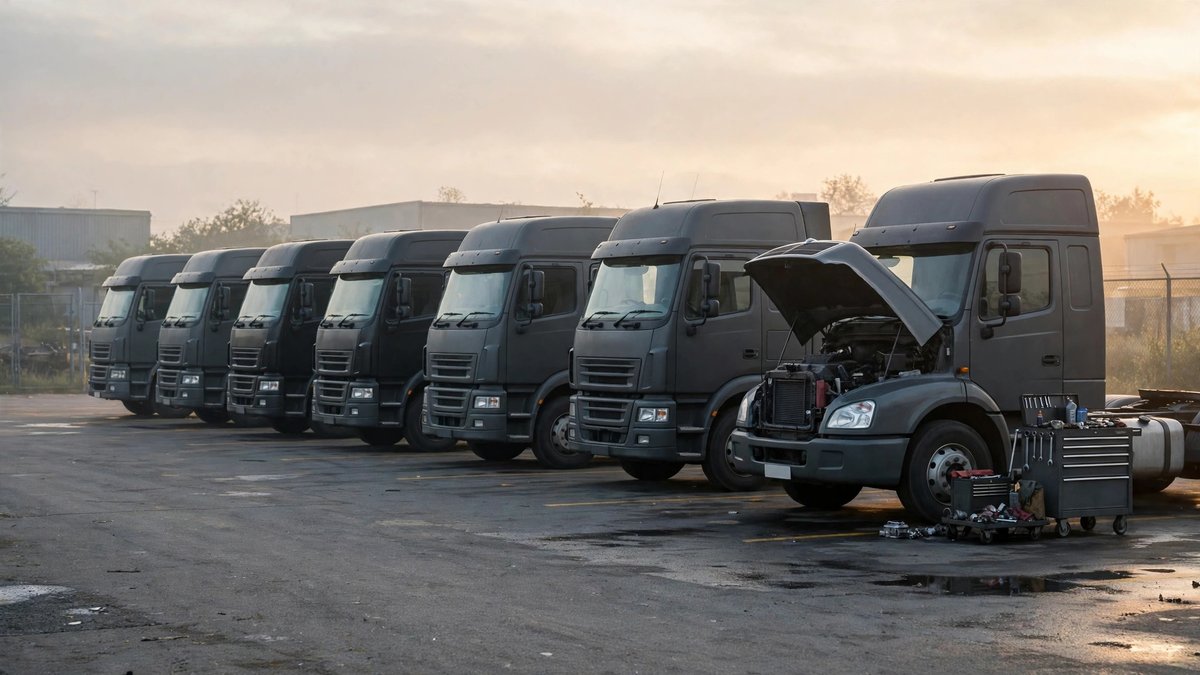
The driver secures the scene, then makes one call — to dispatch — with location, failure, and load status, before any service is requested.
Scene first: shoulder position, flashers, triangles — the playbook never trades safety steps for speed steps
Dispatch opens the event record at the first call: unit number, driver, location on the highway, failure, load and deadline
Every later decision (repair, tow, swap, rescue) prices off that record
Dispatch owns the decision; the driver owns the information. The driver does not negotiate repairs, and dispatch does not guess at the failure.
The authorization question is decided on fleet policy, not on the shoulder: repair in place, tow to a vendor, or send a rescue unit
Fleets run on cost-per-event data: the average mechanical roadside repair benchmarked at $491 (FleetNet, Q1 2020) and rising — approvals follow pre-set bands, not improvisation
A driver who knows his authorization band keeps the event moving; a driver waiting on a callback chain is the downtime
Repair in place when the failure is a known roadside fix (tires, batteries, air, cooling, DPF); tow when the diagnosis is unknown or the repair exceeds the band; swap or rescue when the load's clock beats the truck's clock.
Tires are 53.5% of tractor roadside events (TMC, via FleetNet) — most fleet events are repairs, not tows
A loaded trailer with a deadline converts the question: the freight's penalty exposure prices the decision, not the repair bill
Downtime runs $448–$760 per day in lost hauling alone (ATRI, via Heavy Duty Journal) — an hour of decision delay is a line item
One timeline: reported, authorized, unit accepted, unit on scene, rolling again — with the operator's name recorded at acceptance.
The dispatcher who can see the event's status does not spend the event on hold with a call center
Cost per event, by unit and by failure type, is the data that renegotiates next quarter's vendor rates
Repeat failures on the same unit leave the playbook and enter maintenance review — three same-system events is a pattern, not luck
Stay reachable, stay with the truck unless the scene is unsafe, and keep the phone free — the service operator's staging call comes to that number.
Photograph the failure if it is safe to do so — a tire position photo or a dash fault code shortens the service truck's load-out decision
Log the times: stopped, reported, rolling — the driver's log is the event record's ground truth