Driver guide · National edition
Published October 30, 2026 · TruckRescueNow driver guide bank, stamped October 2026
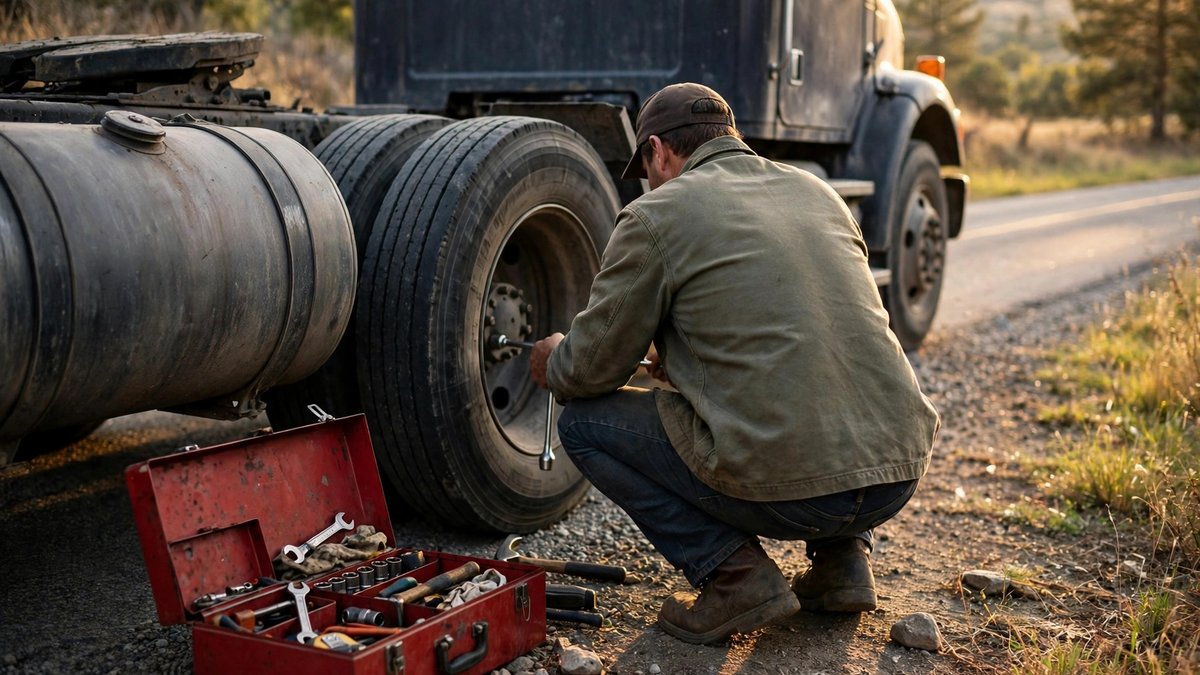
You are the driver, the dispatcher, and the bank in one phone call — every decision is yours, and every hour of the decision is your money.
Fleet drivers spend company money inside a policy; you spend your own inside a judgment call
Fleet managers put total downtime cost at $1,000–$9,000 per truck per day depending on equipment and freight (TruckUp 2026 fleet-manager interviews) — as an owner-operator you sit at the sharp end of that range: no load moves, no money moves
Scene safety, then the repair-or-tow call — and you make it on the failure, not the fear: known roadside fixes get fixed where you sit.
Tires, batteries, air, cooling, and DPF faults are the shoulder-fixable majority — tires alone are 53.5% of tractor road calls (TMC, via FleetNet)
Unknown internal engine or transmission failures are tow decisions — do not buy a roadside diagnosis tour on a dead engine
Ask the price basis before the truck rolls, and get the full ticket shape: call-out, labor rate, parts — not a single vague number
Call the broker or customer before the story reaches them second-hand, with the facts you have: where, what failed, what is already rolling to you.
A reefer load is a cargo clock — say "reefer" in the first sentence of every call (see the reefer article in this series)
If the truck cannot be saved today, the load-rescue question (another tractor under your trailer) is a separate, cheaper conversation than the repair
Documentation is your claim armor: times, photos, the service invoice — keep all of it
Know your payment position before you need it: fleet cards, Comchek and similar instruments, and cash reserves are the roadside currencies — confirm the operator's accepted methods on the call, before he rolls.
Average common roadside repair: $300–$800 (published operator rates, Road Rescue Network/Albert's) — keep a reserve sized to the real band, not the hopeful one
Get the invoice itemized: call-out, labor hours, parts — an itemized invoice is deductible, defensible, and comparable next time
Never sign a blank authorization; authorize the diagnosis and a stated repair ceiling
Convert every breakdown into a bench: the operator who treated you right on a corridor tonight goes in your phone by corridor, not by brand.
Owner-operators build a private map of who actually rolls, corridor by corridor — every city and exit area you run is an entry on it now
Track your own cost per event: the number tells you when a repair reserve becomes a replacement-truck conversation