Driver guide · National edition
Published October 30, 2026 · TruckRescueNow driver guide bank, stamped October 2026
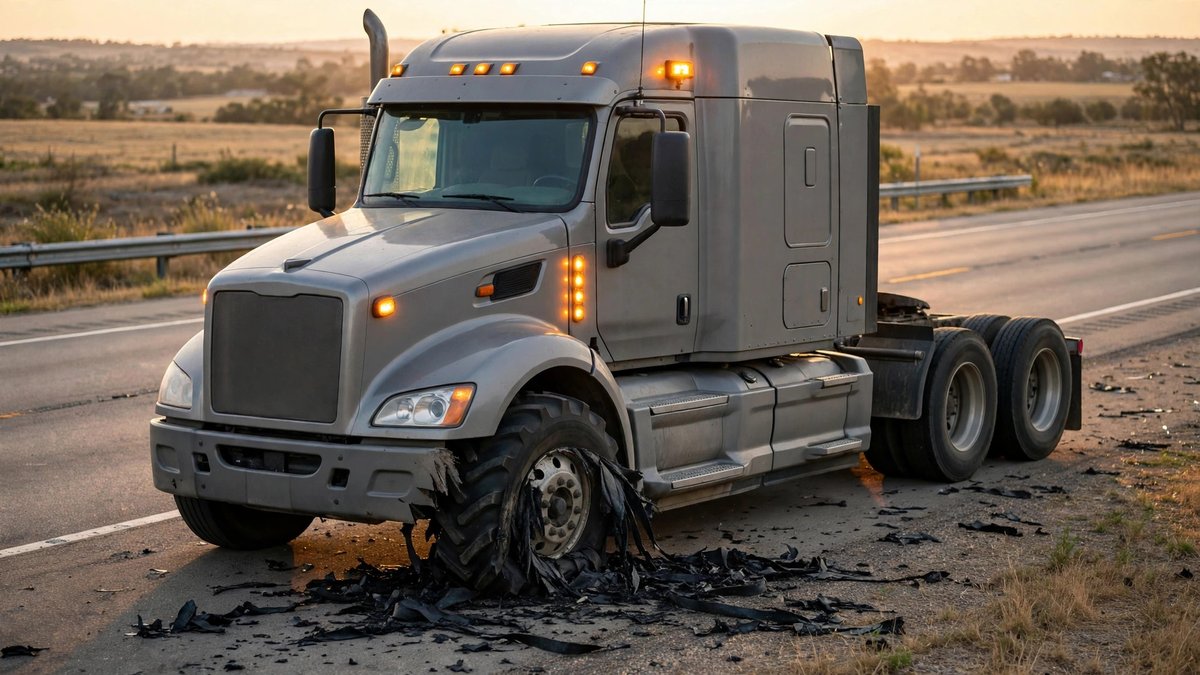
A steer tire steers the truck — when it blows, the truck pulls hard toward the blown side, and your only job for the first seconds is keeping it straight.
You have one steer tire per side — there is no dual mate carrying the load
The rim can drop to the pavement and dig in if you brake hard
A drive or trailer blowout is a noise and a vibration; a steer blowout is a steering event
Grip the wheel with both hands, hold your line, and let off the fuel — no brake until the truck is tracking straight and slowing.
Do not steer against the pull in jerks — firm, steady pressure
Once speed is down and the truck is stable, brake gently
Then signal and move right, the same as any blowout
No driving on it — not to the exit, not to the shop. The truck gets a tire where it sits, or it gets towed.
A steer position cannot limp: the rim on pavement destroys the rim, the fender, and can cut the drag link and air lines
If you stopped in a travel lane, call 911 first — a lane-blocked truck is a traffic emergency before it is a tire job
If the shoulder is dangerously narrow, tell the dispatcher exactly that — it changes what the service truck brings and where it stages
Say so before the service truck rolls — working techs call the traffic-side (left) steer the worst call in tire service, because the tech works feet from live traffic.
It changes how the service truck stages: truck positioned as a shield, cones and lighting set for a traffic-side job
You can help before it arrives: triangles set, vest on, and yourself waiting on the shoulder side, away from the lane
Never stand or work on the traffic side of your own truck while you wait
Steer position, which side, and the tire size — steer tires are the most position-specific tire on the truck.
Whether the rim is bent or ground down
Whether the truck is loaded — it changes jack placement and lift capacity needed
Your location — the highway you're on: direction and nearest exit or mile marker
A tier-one steer tire typically runs $600–$800 for the tire, plus the $150–$250 service call — published roadside rate ranges (GTS Roadside; Road Rescue Network).
Steer positions get new, matched tires — a used casing that might be acceptable on a trailer is not a steer answer
Both steers should match in size and tread type when the job is done
Underinflation is the leading cause of tire failure — check steer pressures cold, with a gauge, not a thump.
Inspect for sidewall cuts, bulges, and uneven wear at every pre-trip
Uneven steer wear is an alignment message — fix the cause, not just the tire