Driver guide · National edition
Published October 30, 2026 · TruckRescueNow driver guide bank, stamped October 2026
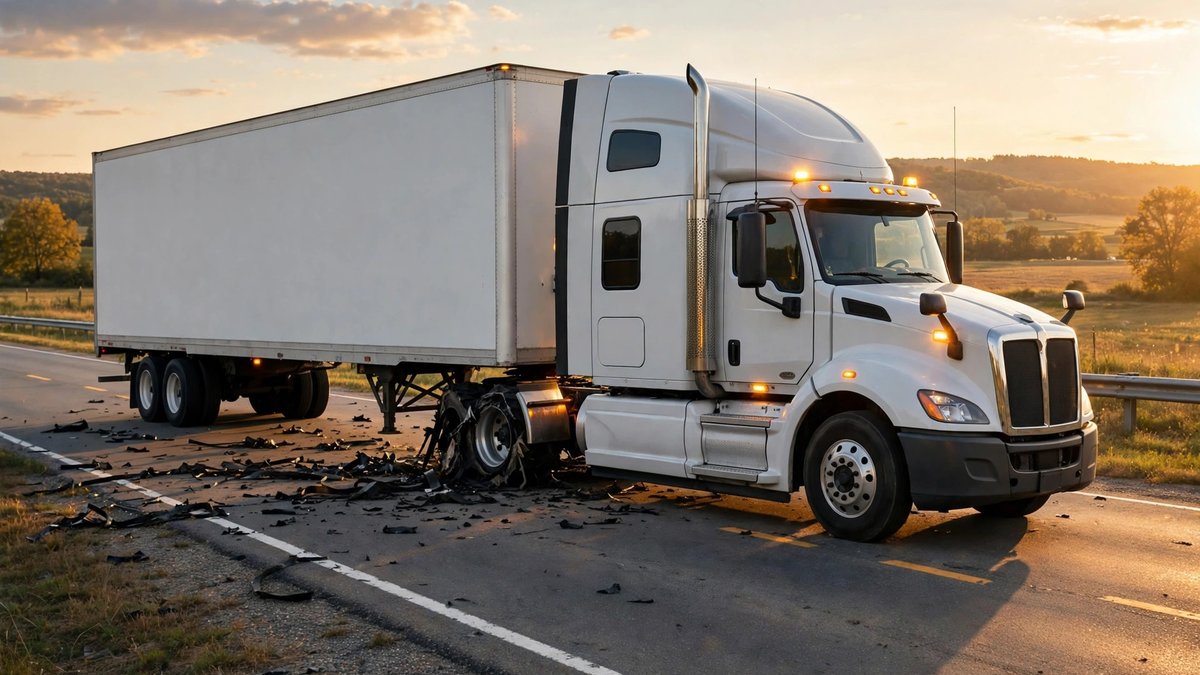
Keep both hands on the wheel and hold the truck straight — do not brake hard and do not yank the wheel.
Ease off the throttle gradually
Let the truck slow on its own before you touch the brake pedal
A hard brake on a blown tire can pull the truck sideways
Signal, check mirrors, and move to the right shoulder or the nearest wide spot — an exit ramp if one is close.
Stop as far right as the shoulder allows, wheels straight
Choose flat, firm ground — a jack cannot work safely on a soft or sloped shoulder
If the shoulder is narrow, a well-lit parking area or stop lot near the nearest exit is the safer stop
Set the parking brake, turn on the four-way flashers, and put out your warning triangles.
Triangles: one near the rear of the trailer, one further back, one furthest back — spaced so traffic sees the warning early
Wear a reflective vest before you walk the trailer, especially at night
Stay on the shoulder side of the truck — never work between the truck and the travel lane
Walk the full tire set: the blown tire, its dual mate, and the tires next to it.
A blown tire often damages its mate — the mate carried double load while you slowed down
Check for rubber debris wrapped at the hub, a damaged rim, and a torn mudflap or air line
Note which position failed: steer, drive, or trailer — the service truck needs that before it rolls
A blown steer tire: no. A single blown drive or trailer tire: only at low speed, only if the mate is holding air, and only to a safe stop — never to finish the run.
Running on the rim destroys the rim and turns a tire job into a tire-plus-rim job
Shredded rubber can take out air lines, lights, and mudflaps as it comes off
Tires are the #1 roadside event for tractors — 53.5% of all road calls (TMC, via FleetNet America) — service trucks are set up for exactly this
Your exact location: the highway you're on, direction, and the nearest exit or mile marker.
Tire position (steer / drive / trailer, and which side)
Tire size — read off the sidewall if you can do it safely
Loaded or empty, and whether the rim looks damaged
The full checklist is in the "what to tell dispatch" article in this series