Driver guide · National edition
Published October 30, 2026 · TruckRescueNow driver guide bank, stamped October 2026
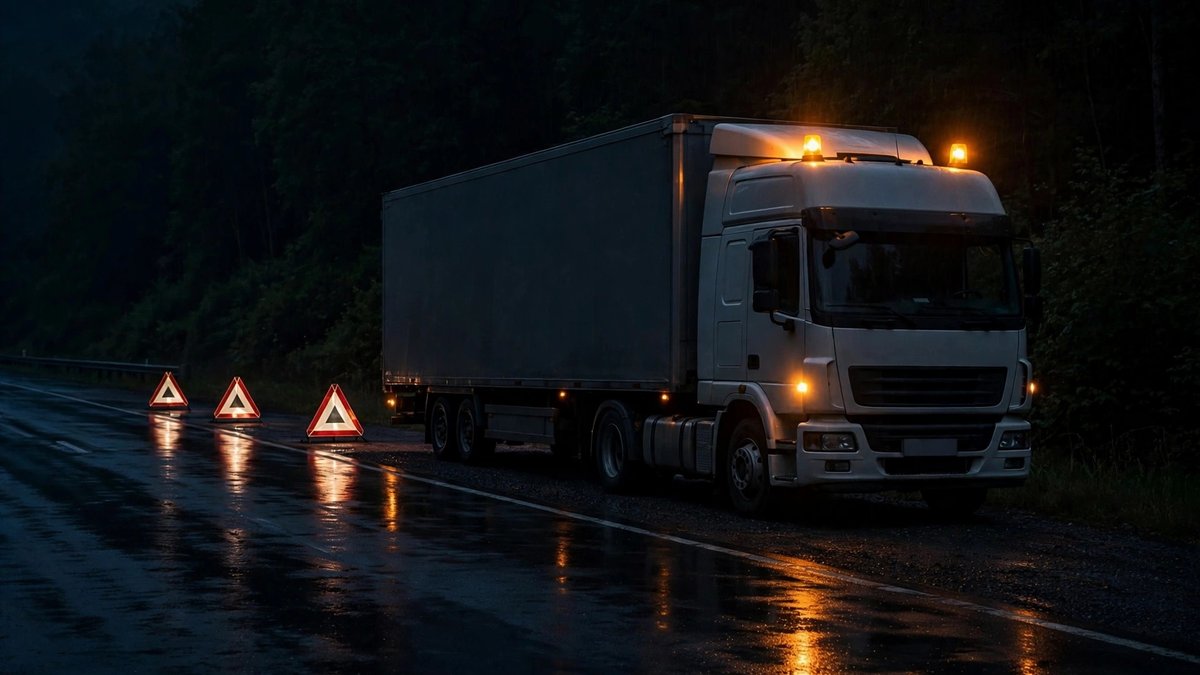
Everything: at night you are alone with a phone and your wits, traffic cannot see you early, and the most dangerous place in trucking is the strip of pavement between your truck and the travel lane.
Working techs in the trade call the night call a different animal entirely — the scene, not the repair, is the risk
Assume every passing driver sees you later than you think, and some do not see you at all
The widest, straightest, best-lit place you can reach — a rest area, a stop lot near the nearest exit, or a wide shoulder on a straight stretch, in that order.
Avoid stopping just over a crest or just past a curve — that is where sight distance dies
If the failure allows any roll at all, spend it on position, not distance
A traffic-side failure (left side of the truck) changes the plan: tell the service operator which side failed before they roll — it changes how the service truck stages
Four-way flashers on, triangles out with the farthest triangle placed well back, reflective vest on before you exit the cab, and every light the truck has working pointed at the problem.
At night, triangles go further back than your daylight habit — closing speed is the same, reaction time is not
Exit the cab on the shoulder side whenever the truck allows it
Never turn your back to traffic, and never kneel in the lane-side space to inspect anything
Away from the truck, on the shoulder side, behind a barrier if one exists — a stopped truck gets hit from behind, and you do not want to be in it or beside its traffic side when it happens.
If you stay in the cab, seatbelt on — a belted driver in a struck truck survives what an unbelted one does not
Keep the phone charged and your location pinned: highway, direction, nearest exit or mile marker
If anyone stops to "help" and it feels wrong, stay in the locked cab and call it in — your judgment is a safety device
That it is a night call, which side of the truck failed, and how much shoulder room you have — night and traffic-side calls are staged differently by professionals, and hiding it helps no one.
Whether your triangles and lights are working — a truck with dead electrical at night is a darker scene than the operator assumes
Stay reachable: the operator may call you back for a staging update before the truck rolls